A textile mill knows exactly how to deliver a hundred thousand metres of fabric to a buyer’s specification, on time and at a price that holds. A fashion label has to make a stranger want to wear something they have never touched. The two businesses share a raw material and almost nothing else, which is why so many textile companies that launch their own clothing line discover that the factory was the easy part.
The ambition itself is sound. A manufacturer with control over its fabric holds an advantage that most fashion start-ups would pay heavily to own. The difficulty lies in turning that advantage into something a customer can feel, and that is a brand problem before it is a design problem.
Why is it hard for a textile business to become a consumer brand?
It is hard because the skills that make a textile business successful do not transfer directly to consumer branding. Textile companies win on volume, consistency and long relationships with professional buyers who judge by specification. Consumers buy fashion on desire, identity and the sense of belonging to something, and they judge within seconds. A business that excels at the first rarely has the instincts for the second, so those instincts have to be built into the brand strategy deliberately.
What changes when a manufacturer becomes a fashion brand?
Three things change at once, and a brand that addresses only one of them tends to stall.
The customer becomes a person
A procurement team compares tender documents. A wearer compares themselves with the person they want to be. Clothing brand branding therefore has to begin with a defined wearer: who they are, what they aspire to, where they shop and what they would never put on. A label that tries to appeal to everyone ends up as a well-made product with no particular reason to be chosen.
The product becomes a point of view
Fabric is sold by specification, while fashion is sold by taste. Collections, assortments, price tiers and seasonal rhythm all need an editorial logic, and that logic has to come from the brand position rather than from whatever the mill happens to produce best.
The business takes a different shape
Retail space, inventory risk, markdowns, marketing spend and a customer who can leave in a single click all arrive together. The brand now carries the burden of justifying the price, which the mill never had to do because the buyer’s spreadsheet did it instead.
How does fashion brand strategy begin for a textile company?
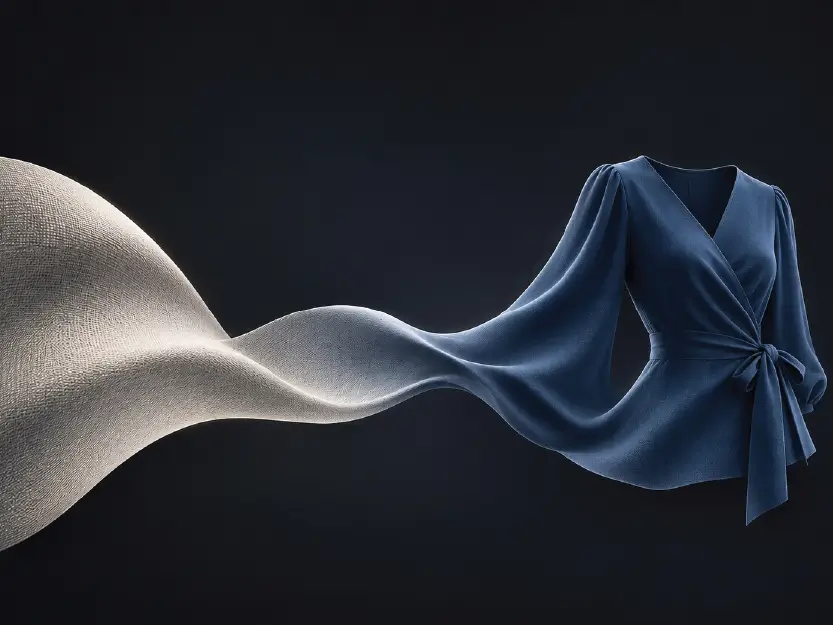
Fashion brand strategy for a textile company begins with the advantage the company already owns, not the aspiration it borrows. A manufacturer that controls its supply chain from fibre to finished garment holds a credible position on provenance, quality control and fabric knowledge that most labels can only imitate. The strategic task is to convert that control into something a wearer can notice, such as a fabric that behaves differently, a fit that holds after fifty washes, or a price that reflects the absence of middlemen.
Our work with Alok Textiles followed this logic. The engagement covered new brand development, strategy, architecture and communication for a textile business building towards a fibre-to-fashion proposition. The useful research question was never what a clothing brand should look like. It was which part of the company’s industrial depth a consumer would pay to be associated with.
What does a fashion brand identity need to do?
A fashion brand identity needs to make the label recognisable, desirable and capable of growing. The name, logo, typography, colour, tone of voice and retail environment must work as a single system, and the name in particular has to travel across languages, markets and trademark registers without losing its meaning.
Architecture is the decision most textile companies postpone and later regret. Does the mill’s name appear on the label, or does it sit quietly behind it? Does one label serve every customer, or does the business need a portfolio with distinct positions and price points? Answering this early costs a few weeks of thinking. Answering it late costs a rebrand.
We have built fashion and retail brands from the ground up, including Lavie and Bagzone, Condor Footwear, Saundh and Lazzaro, covering positioning, naming, identity and, in some cases, retail experience design. The pattern holds across all of them: the brands that last decide what they are before they decide what they look like.
Lifestyle brand branding follows the same rule. A label can stretch into accessories, footwear or home only when the core position is strong enough to bear the extension, and the discipline of knowing where to stop is part of the strategy.
The factory is the credential, not the brand
A textile business turning into a fashion label is changing its audience far more than its industry. The mill gives it a credential most competitors lack, but a credential is something a brand points to, and customers do not buy credentials. They buy a version of themselves. The labels that win from here will be the ones that stop saying what they make and start saying who their customer becomes by wearing it.